
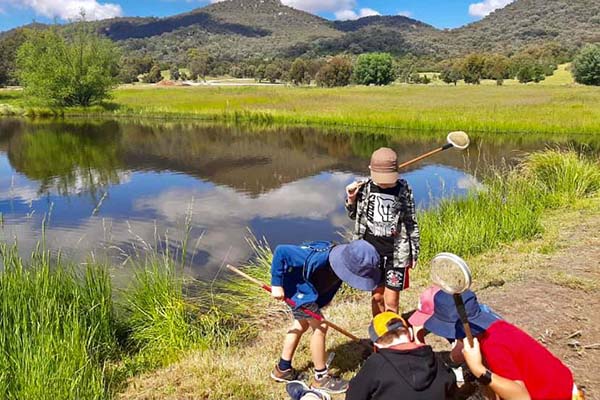
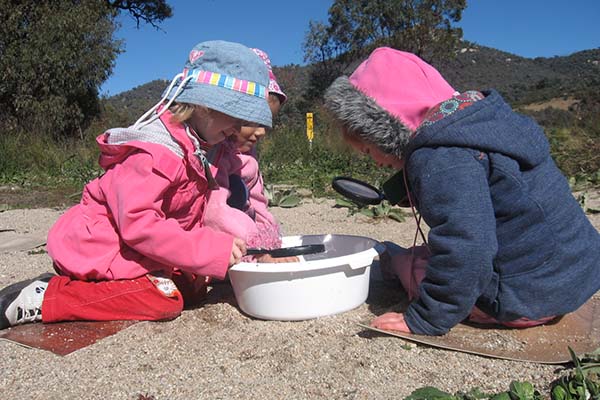
Birrigai is continually developing and refining a suite of innovative teaching and learning programs that connect the learning of Indigenous knowledges and cultures with Science, Technology, Engineering and Mathematics (STEM) concepts outlined in the Australian Curriculum. This is delivered through immersive on Country experiences that connects learning to Ngunnawal Country.
Birrigai offers 11 standalone programs that combine Aboriginal and Torres Strait Islander perspectives and STEM content tailored to students from kindergarten to year 12 level.
Birrigai’s STEM programs are well regarded. In 2019 Birrigai Outdoor School (ACT) was a national finalist in the CSIRO Indigenous STEM School Award recognising how Indigenous knowledge became the foundation for the teaching of STEM at Birrigai.
Of the 36 unique Aboriginal and Torres Strait Islander Science programs offered, some of the more frequently delivered topics cover:
- The technology and knowledge used within Aboriginal and Torres Strait Islander shelters and how aspects of this technology translate to present day housing.
- Fire as a tool in ecological land management, food preparation, tool making, and the use of carbon dating to establish a timeline of Aboriginal association with the land.
- Indigenous plant use for both food, medicine, tool making and fibre, including learning to identify local plants through bush walks and how they could be used.
- Making rope and exploring how it was used in traditional society for fishing and hunting as well as in the tool making processes.
- Aboriginal knowledges and practices of the management of Country including sustainable resource management.
Explore the STEM programs within the Birrigai School Program Options 2025 (5Mb).
“Modern day environmental problems have social and cultural dimensions which benefit from perspectives other than Western science. While scientific knowledge is needed to solve these problems, science alone is often not sufficient and Indigenous Knowledge may make a useful contribution.” – Australian National University – Living Knowledge Project